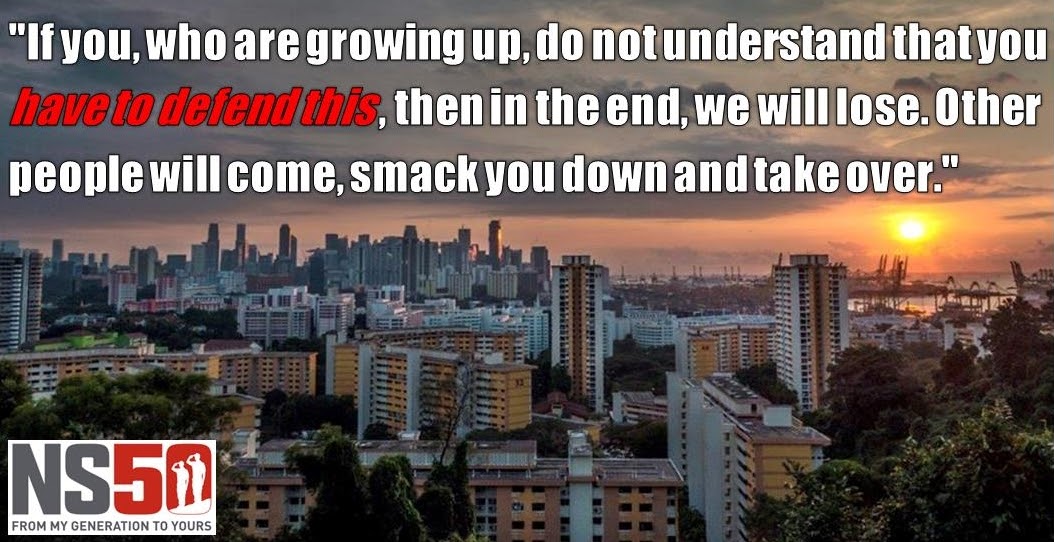
“We have no enemies now. Why does Singapore need to spend so
much money on defense?”
“Why do we need to do National Service (NS)?”
“NS is a waste of my time. It has made me fall behind in my career
as compared to my overseas peers.”
“One bomb and Singapore is done for. Why bother with NS/defense/SAF?”
The answer to all these grouses/complaints/questions is actually pretty simple.
This is why.
Skulls, bones and other grisly remains being exhumed from a mass grave of Operation Sook Ching victims in Bedok on June 10, 1966. These remains were ultimately laid to rest at the Civilian War Memorial along Beach Road.
Japanese Troops posed triumphantly in front of the Railway Station, 1942. “昭南驛” translates into “Syonan Station”. (Source)
Japanese Atrocities: Soldiers preparing to shoot prisoners 20 meters away. Photo found amongst Japanese records when British retook Singapore.
Japanese Atrocities: Photo found amongst Japanese records when British retook Singapore.
Percival & other British Officers carrying the Union Jack to surrender Singapore to the Japanese
After Singapore came under Japanese control, the Japanese, apart from stripping Singapore of its name and calling her "Syonan-to", began brutal actions to cower the local populace so as to solidify their grip on Singapore.
People were made to bow to the Japanese soldiers. Those who did not, or refuse to do so, would be severely beaten, some even killed.
But that was not the end of their cruelty.
The Japanese started the "Sook Ching" (a Chinese term meaning "purge through cleansing") operation which was intended, not only to purge the Chinese populace in Singapore of any anti-Japanese opposition, but seemly targeting mainly the chinese in revenge for their support to China in the war against Japan.
"... On 17th February, our new masters issued their first public order in Singapore, now called Syonanto: all male Chinese adults were to report the very next day at designated camps – under threat of “severe punishment”, a phrase quickly to become familiar. Most of us presumed then it was only for some kind of registration of people.
But those concentrations of the Chinese were actually for a sinister purpose.
The conquering Japanese troops had arrived with horrendous baggage: memories of bloody encounters with the mainland Chinese in the still ongoing Sino-Japanese war.
And they were sorely aware that the Chinese in Singapore had been anti-Japanese, staging demonstrations, organising boycotts of Japanese goods and raising money (the China War Relief Fund) to help the Chinese on the mainland in their fight against invasion. And there were the Singapore Chinese who took up arms against the Japanese: volunteers with the British forces as well as those MCP (Malayan Communist Party) diehards, who struggled against them in the jungles of the Malay Peninsula.
Led by the ruthless Kempeitai (Japanese Military Police), the victorious soldiers went all out to screen the Chinese, however hasty and slapdash the operation, to seek and destroy anyone suspected of being hostile, no matter how flimsy the evidence, no matter how many were fingered. ..."
Many families, even till today, still grieve over the fate of their loved ones who went through the screening, and never came back. And many families had to assume that their loved ones were lost to the war.
Skulls, bones and other grisly remains being exhumed from a mass grave of Operation Sook Ching victims in Bedok on June 10, 1966. Photo: The Straits Times (via AsiaOne)
Skulls,
bones and other grisly remains being exhumed from a mass grave of
Operation Sook Ching victims in Bedok on June 10, 1966.
Photo: The Straits Times
- See more at:
http://news.asiaone.com/news/singapore/75-years-singapore-fell-operation-sook-ching-during-japanese-occupation#sthash.KgXzdJ1J.dpuf
Skulls,
bones and other grisly remains being exhumed from a mass grave of
Operation Sook Ching victims in Bedok on June 10, 1966.
Photo: The Straits Times
- See more at:
http://news.asiaone.com/news/singapore/75-years-singapore-fell-operation-sook-ching-during-japanese-occupation#sthash.KgXzdJ1J.dpuf
"... Thousands of other men were not so fortunate. Suspected of being anti-Japanese elements, these men were loaded into lorries and transported to remote areas such as Changi, Punggol and Bedok for execution.
At these sites, the suspects were machine-gunned to death and often their bodies were thrown into the sea. In some instances, British prisoners of war (POWs) were tasked to bury the bodies.
Known massacre sites include beaches at Punggol, Changi, Katong, Tanah Merah and Blakang Mati (now Sentosa island). Massacres were said to have also occurred at Hougang, Thomson Road, Changi Road, Siglap, Bedok and East Coast.
Due to a lack of written records, the exact number of people killed in the operation is unknown. The official figure given by the Japanese is 5,000 although the actual number is believed to be much higher.
Lieutenant Colonel Hishakari Takafumi, a newspaper correspondent at the time, claimed that the plan was to kill 50,000 Chinese and that half that number had been reached when the order was received to stop the operation. ..."
After the war ended, seven , seven Japanese officers were charged during a war crimes trial in Singapore for their participation in Operation Sook Ching in 1947.
All seven officers were found guilty. Two officers, Lieutenant General Saburo Kawamura and Lieutenant Colonel Masayuki Oishi, were sentenced to death while the remaining five were given life sentences.
In 1962, more mass graves were found in the Siglap area - dubbed as the 'Valley of Tears' by the press. The remains of the victims from various sites were exhumed and gathered for reburial in a dedicated memorial site, which would later be the Civilian War Memorial.
The Civilian War Memorial
Completed in 1967, the Civilian War Memorial stands prominently along Beach road in Singapore's civic district, and is dedicated to the memory of not only the victims of the Sook Ching operation, but for all civilians who had died as a result of the Japanese Occupation.
"... Comprising four tapering columns at a height of 67 metres, the Civilian War Memorial is affectionately known as the ‘Four Chopsticks’ by locals. Each column represents one of the four main ethnic groups in Singapore who perished during the Japanese Occupation: Chinese, Malays, Indians, and Eurasians. ..."
"... Painted white, the prominent structure can be seen from afar, both in the day and at night. It sits on a raised platform enclosing a vault that holds the victims’ remains in 606 urns. Within the four columns, an empty urn placed on a pedestal, together with inscriptions commemorating the deaths of countless civilians, brings visitors’ attention to the burial chamber underneath. ..."
"... a black urn (sits) atop a high white pedestal with lion heads in relief. The
words "In deep and lasting sorrow this memorial is dedicated in memory
of those of our civilians who were killed between February 15, 1942 and
August 18, 1945 when the Japanese Armed Forces occupied Singapore" are
inscribed on the pedestal. There are translations in Malay and Tamil on
the right and left respectively. ..."
"... Then finally the Monument was unveiled by Prime Minister Mr. Lee Kuan Yew, on 15 February 1967, the 25th anniversary of the Fall of Singapore.
In his speech, Mr. Lee said, "We meet not to rekindle old fires of hatred, nor to seek settlements for blood debts. We meet to remember the men and women who were the hapless victims of one of the fires of history. This monument will remind those of us who were here 25 years ago, of what can happen to people caught completely unaware and unprepared for what was in store for them. It will help our children understand and remember, what we have told them of this lesson we paid so bitterly to learn".
Before the Prime Minister unveiled a plaque, and laid the first wreath on behalf of the Government and the people of Singapore, prayers were said by leaders of the Inter-Religious Council representing Muslims, Buddhists, Christians, Hindu, Jewish, Sikh and Zoroastrian faiths. A 3-minute silence followed the laying of the wreaths. Many families of the dead were there, especially their weeping mothers. ..."
In the years that would follow, there would be various ceremonies and services that would take place on 15 Feb to mark the anniversary of the 'Fall of Singapore' when Singapore was surrendered to the Japanese by the British.
Bell of remembrance rung at Kranji War Cemetery to mark 75th anniversary of the fall of Singapore
Straits Times, 15 Feb 2017
SINGAPORE - The casualties of World War II were honoured at Kranji
War Cemetery on Wednesday (Feb 15), the 75th anniversary of the fall of
Singapore.
In a solemn ceremony attended by dignitaries, diplomats, and military
officials and veterans, a bell of remembrance was rung five times -
once for every year that the war raged in the Pacific.
Under an overcast sky from which a slight drizzle fell at times,
Japanese Ambassador to Singapore Kenji Shinoda was one of the first VIPs
to lay a wreath of poppies - which traditionally symbolise blood shed
on the battlefield.
This is the first time Japan is working with former Allied countries,
including Singapore, to organise a World War II commemoration ceremony
here.
Three World War II survivors were the last to lay their wreaths near
the Singapore Memorial, inscribed with the name of more than 24,000
soldiers and airmen who died during the war in Malaya and Indonesia and
have no known grave.
"I express my feelings of profound grief and heartfelt condolences. I believe that such feelings are shared by the overwhelming majority of Japanese."
Kenji Shinoda
Japanese Ambassador to Singapore
"... While many have never experienced the horrors of war, they must never
forget the lessons learned and the commitment and sacrifices of their
forefathers in protecting the country and its way of life.
This commitment to remember the horrors of war and to defend Singapore is at the core of Total Defence.
It is when every Singaporean is resolved to play their part, and contribute to keeping Singapore strong on all fronts, that we can be confident of safeguarding our nation and our home against different threats and challenges that come our way. ..."
Vikram Nair
Chairman of the Government Parliamentary Committee for Defence and Foreign Affairs
Video: By Tedd Jong, 22-year-old student who was there as part of the NUS History Society.
Not long after the British Surrender on 15 Feb 1942, the Japanese moved quickly to consolidate their control of Singapore.
One of the first things they did was to re-name Singapore as 'Syonan-to' ( 昭南島 Shōnan-tō), which means "Light of the South".
But they didn't just stop there.
The Tanjong Pagar Railway station was renamed as "Syonan Station".
Japanese Troops posed triumphantly in front of Tanjong Pagar Railway Station. “昭南驛” translates into “Syonan Station”. Pic: SG Film Hunter
The Japanese took over 'The Straits Times' offices and the paper was renamed as "The Shonan Times". The paper would see two more name changes - "The Syonan Times" and then later as "Syonan Sinbun".
The local time in Singapore was moved forward by 1½ hours so as to be in sync with Tokyo time.
Schools were made to teach the Japanese language and textbooks were printed in Japanese. School children had to stand facing the direction of Japan and to sing the national Japanese anthem.
This was the wartime currency that was issued by the Japanese Government for the occupied territories of Malaya and Singapore during the Japanese Occupation.
The British currency was replaced with Japanese currency which was known as “Banana money” due to the picture of a Banana tree on the note. The currency would ultimately became worthless due massive amounts printed.
These changes would be the least of the problems that Singapore would face during the Japanese Occupation
The next three and a half years under the brutal Japanese rule would prove to be the darkest period in Singapore's history.
Voices From Syonan-To
History Of Singapore During The Japanese Occupation
Fall of Singapore during World War Two - Kartar Singh, eyewitness to atrocities
On 15 Feb at 6.20pm, Singapore's network of Public Warning System (PWS) sirens will sound the "Important Message" signal to mark Total Defence Day.
6.20pm of 15 Feb also marks the time when the British surrendered Singapore to the Japanese Imperial Army in 1942.
"The PWS sounding serves to give due significance and remembrance to this historical moment. It also underscores the importance of emergency preparedness and for Singaporeans to defend our homeland."
SCDF
Upon hearing the signal, the public can tune in immediately to any local
radio station for a brief message on the PWS, or visit the SCDF website to learn more about PWS signals.
"... The PWS also has a long genesis. It was commissioned more than two decades ago in 1991 and builds on plans laid in the mid-1980s that recommended several measures to harden Singapore against air raids.
To keep the network running 24/7, engineers are rostered to service around seven PWS sirens every day. Crisis planners have also built in several fail-safes to ensure that the sirens will blare when they have to. Each siren is powered by electricity from the national grid and has a back-up battery. The system to sound the siren comprises landlines and radio back-up.
This long-term approach to national emergency preparedness planning could be better appreciated by the average Singaporean as we live in a country better prepared than most for crisis situations.
It is a wake-up call one hopes Singaporeans will not be forced to heed.
When that wake-up call arrives, NEST will be ready. What about you? ..."
Lieutenant-General Percival and his party carry the Union flag on their way to surrender Singapore to the Japanese. Pic: Imperial War Museums
75 years ago, on 15 Feb 1942, Lieutenant-General Arthur Ernest Percival met with General Tomoyuki Yamashita at the Ford Factory in Bukit Timah, where the British formally surrendered Singapore to the Japanese.
Singapore had fallen to the Japanese in just over 7 days after the Japanese Army’s initial landing on 8 Feb.
Japanese Troops Marching through Fullerton Square. Pic: Wikipedia
The surrender was a huge shock to the British as Singapore had long been considered to be an “impregnable fortress” – the “Gibraltar of the Far East”. The forces in Singapore, comprising of British, Indian, Malaya and Australian troops, fought bravely and as best as they could to defend the island but to no avail.
Generals At War - Battle of Singapore
Singapore was renamed by the Japanese as ‘Syonan-To’ (meaning ‘Light of the South’), thus marked the beginning the Japanese Occupation.
The Japanese Occupation, lasting almost 4 years, would be one of the darkest chapters in Singapore’s history. The populace as well as the captured Allied Forces were brutalized and suffered many atrocities during the Japanese Occupation. The Japanese was estimated to have executed 50,000 civilians as part of their efforts to eliminate any resistance to the Japanese Occupation.
The Singapore Story (Japanese Occupation of Singapore 1942 - 1945)
Total Defence Day 2017 Message from Defence Minister Ng Eng Hen
"... On 15 February, 75 years ago, Singapore fell, as British forces
surrendered to Japanese invaders.
In this video, I stand in the very
room in the former Ford Factory along
Upper Bukit Timah Road in which the surrender took place.
Three and a
half years of suffering and deprivation followed for those living in
Singapore under Japanese Occupation.
This is why we commemorate Total Defence Day on 15 February every year –
a reminder that only when everyone plays a part through Military,
Civil, Economic, Social and Psychological Defence, can we ensure a
Singapore that is safe, secure and sovereign. ..."
2nd Lt Adnan Saidi (1915 – 14 February 1942), was a Malayan soldier of the 1st Infantry Brigade which fought the Japanese in the Battle of Singapore. He is regarded by Singaporeans and Malaysians today as a hero for his actions on Bukit Chandu's Battle for Pasir Panjang.
On 14 Feb 1942, one of the fiercest and bloodiest battle of
Singapore took place at Bukit Chandu, Pasir Panjang which was part of the British’s
final defense parameter against the invading Japanese army.
Bukit Chandu
The Battle of Opium Hill (Bukit Chandu)
The Battle of Opium Hill on 14 February 1942 at Pasir Panjang was one of the fiercest battles that took place in Singapore in World War II. It pitted the invading Japanese Imperial Army against the brave but heavily out-numbered troops of the Malay Regiment.
The battle is also remembered for the heroism of Lieutenant Adnan Saidi, a platoon commander of the 1st Battalion who, together with his men, fought the Japanese to their grisly deaths. Today, an interpretive centre, Reflections at Bukit Chandu, stands on the hill, commemorating the battle and the contributions of these men.
Opium Hill, or Bukit Chandu in Malay, constituted the British final defence parameter against the invading Japanese army. The Japanese campaign to invade Singapore had begun on 8 February 1942, with one strategic defensive position after another rapidly falling into Japanese hands.
By 13 February, the Japanese Imperial Army (JIA) had shifted its attention to Pasir Panjang Ridge. The ridge was important because it offered a passage to the Alexandra area where the British Military Hospital and the main British ammunition and ordinance depots were located.
The task of defending the ridge was assigned to the Malay Regiment. It distinguished itself by fighting on despite heavy and continuous shelling by the Japanese army. Despite the regiment’s valiant resistance, the defence lines fell and the 18th Division of the JIA gained control of the western side of the ridge. Only the “C” Company of the 1st Malay Battalion was able to maintain its position at Pasir Panjang Village.
Having suffered great losses, the Malay Regiment withdrew in the evening to establish a new defence position in the Buona Vista area. “C” Company, which included Adnan and his men in No. 7 Platoon, was sent to Point 226 (or Bukit Chandu) on the eastern end of the ridge. The hill was named after an opium-processing factory located on the hill.
The Japanese continued their offensive on 14 February. In the early afternoon, Japanese troops were spotted advancing uphill on Bukit Chandu, disguised as Punjabi soldiers of the British Indian Army. Adnan’s suspicion was stirred when he noticed that the troops were moving in groups of four instead of the usual three, as was the norm for the British army.
Realising that these were in fact enemy troops disguised as British Indian soldiers, Adnan ordered his men to open fire. 20 enemy men were mortally wounded, causing the Japanese to retreat. This victory for the Malay Regiment was however short-lived as two hours later, the Japanese launched an all-out attack with more soldiers, artillery, and air and mortar bombardment.
Fierce fighting ensued on Opium Hill, and when ammunition ran short, Adnan and his men resorted to hand-to-hand combat using their bayonets. Heavily out-numbered, the men of “C” Company were completely overrun and fell to the Japanese.
According to official and eye-witness accounts, Adnan was hung from a tree and repeatedly bayoneted until he died. By the afternoon of 14 February, the defence line at Pasir Panjang Ridge had been breached. The Japanese captured Alexandra Military Hospital and subsequently massacred its occupants, leaving only a few to escape.
After the war, a book titled The Malay Regiment 1933–1947 was published by the Department of Public Relations of the Malay Peninsula in 1947, to chronicle the heroic deeds of the Malay Regiment. In 1956 and 1957, the British war department and the local government agreed to preserve the site of the battle at the Pasir Panjang Ridge as an open field.
On 8 Feb 1942, after intensively bombing the northwestern coast of Singapore, the Imperial Japanese Army crossed over the Johore Straits from Malaya and landed in Singapore. The Australian Troops that were tasked to defending the area were quickly overran by the Japanese forces.
Australian positions in Singapore 8-15 February
1942
"... The Japanese had prepared for the invasion of Singapore
with a heavy bombardment. They began their amphibious landings on the
north-west of the island, where the Strait of Johore is narrowest. This
area was held by the Australian 22nd Infantry Brigade but late on the
night of 8 February the Japanese made their way through undefended sections.
Twenty-four hours later a second Japanese landing force struck between
the Causeway and the mouth of the Kranji River, an area held by the Australian
27th Infantry Brigade. By the morning of 10 February there were Japanese
troops on most of north-west Singapore. ..."
"... The 22nd Australian Brigade had to cover the northwestern coastline but were overwhelmed by the Japanese forces within two hours of the attack due to the latter's numerical superiority. The gaps in their defences were to prove fatal during the invasion.
On the night of 8 February 1942 at around 10:30pm, the Japanese launched their invasion from concealed positions up the Skudai and Melayu Rivers of Johore. Under the cover of darkness and using assault boats and barges, the 5th Division crossed the Straits of Johore. They landed on the coastline between Lim Chu Kang Road and Sarimbun Beach.
As the Australian artillery and searchlight units failed to react, only the first wave of the invasion was repelled. However the numerical superiority of the Japanese forces were either wiped out on the beaches or retreating to new defence lines. ..."
This invasion would mark the beginning of the fall of Singapore to the Imperial Japanese Army, and the subsequent horrific Occupation of Singapore by the Japanese.